
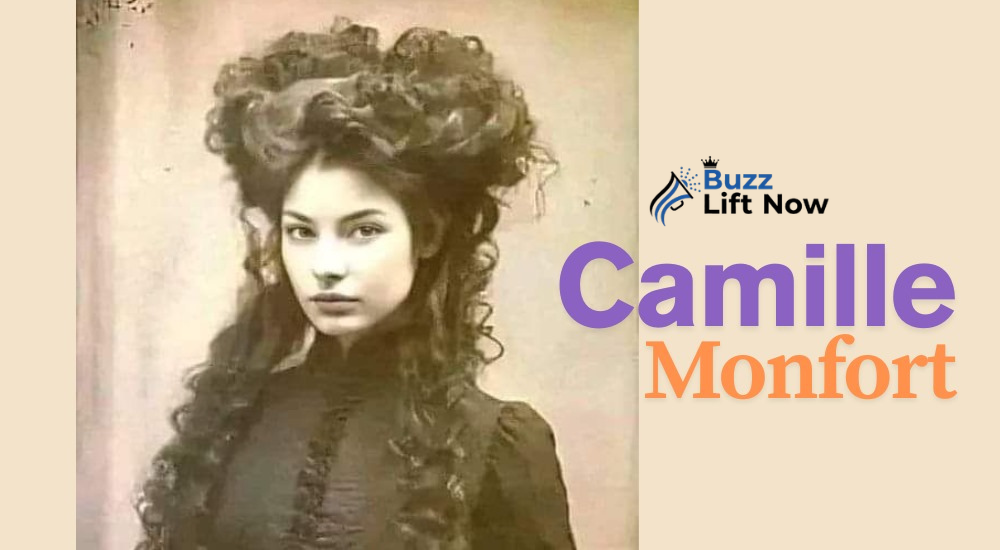

The name camille monfort has fascinated historians, storytellers, and internet readers for years. Whispered across blogs, forums, and folklore discussions, camille monfort is often described as a mysterious French woman whose life blurred the line between reality and legend. Some call her an aristocrat, others a seductress, and many refer to her as a vampire figure tied to the Amazon region of Brazil.
But who was camille monfort, really? Was she a real historical personality, a misunderstood socialite, or simply a myth created by imagination and rumor? In this in-depth exploration, we will examine the origins of the her story, analyze historical context, and separate documented facts from folklore. By the end, you’ll have a clearer understanding of why her continues to capture public curiosity in the digital age.
This article is designed to satisfy informational search intent. If you are researching camille monfort for academic, creative, or general interest purposes, you will find reliable insights, historical context, and balanced analysis grounded in E-E-A-T principles.
The Historical Context Surrounding Camille Monfort
To understand her, it’s important to step back into the late nineteenth century. During this period, Brazil was experiencing social and political transformation. European immigration was common, and French culture carried prestige among the elite classes of South America. Wealthy families often admired European refinement, fashion, and social customs.
According to popular accounts, she was a young French woman who relocated to Brazil during this era. She reportedly belonged to a well-off family and was known for her beauty, charm, and unusual presence. Stories suggest she settled in the Amazon region, possibly in Belém, a city that was thriving due to the rubber boom.
The historical documentation surrounding her is limited. Unlike widely recognized historical figures, there are no robust archival records that clearly establish her biography. This lack of evidence is one of the reasons her remains such an intriguing figure. When documentation is scarce, myths often fill the gaps.
The “Vampire of the Amazon” Legend
The most dramatic aspect of the camille monfort narrative is her association with vampirism. In various retellings, she is referred to as the “Vampire of the Amazon.” These stories claim she avoided sunlight, dressed in dark clothing, and possessed an eerie aura that unsettled those around her.
Such tales likely emerged from cultural fears and misunderstandings. In the late nineteenth century, illnesses such as cholera and other epidemics were common. Sudden deaths, limited medical knowledge, and superstitions often gave rise to supernatural explanations. If she’s lived during a period of widespread disease, it is possible that her association with death or tragedy was exaggerated over time.
It’s essential to approach these claims critically. There is no scientific or historical proof that she was anything other than a human being. The vampire narrative appears to be part of regional folklore rather than documented fact. Folklore frequently transforms real individuals into larger-than-life characters, especially when they are foreign, wealthy, or socially distinct.
Camille Monfort as a Symbol of Social Fear
One compelling interpretation of the camille monfort story is that it reflects societal anxieties. A young, independent, European woman living in a developing region could easily become the subject of gossip. If she challenged gender norms or behaved in ways considered unconventional, rumors might have spread rapidly.
In many cultures, women who defy expectations are often labeled as mysterious or dangerous. The camille monfort legend may represent this phenomenon. Rather than being a literal vampire, her could have been a socially prominent woman whose lifestyle sparked suspicion and imagination.
The Amazon region, with its dense forests and remote communities, also contributed to the atmosphere of mystery. When you combine exotic geography with limited communication and high mortality rates from disease, it becomes easier to understand how camille monfort evolved from a person into a mythic figure.
The Role of Epidemics and Tragedy
Another recurring theme in the camille monfort narrative is disease. Some versions of the story suggest that she died during a cholera outbreak. Cholera was a devastating illness in the nineteenth century, causing rapid dehydration and death. Without modern medicine, outbreaks could wipe out entire communities.
If camille monfort passed away during such an epidemic, her death may have been dramatic or sudden. In an era without detailed medical understanding, unusual symptoms or rapid decline could be interpreted as supernatural. Over time, the tragedy of her death may have been reimagined as evidence of something darker.
It is important to note that historical records from that period in Brazil do confirm multiple epidemics. While direct documentation of camille monfort remains sparse, the broader context of disease outbreaks is well established in historical scholarship. This lends plausibility to the idea that her legend was shaped by real events.
The Power of Oral Tradition
The endurance of camille monfort as a legend demonstrates the power of oral storytelling. Long before the internet amplified her name, stories would have circulated by word of mouth. In close-knit communities, dramatic narratives spread quickly and evolve with each retelling.
Oral tradition often emphasizes emotional impact over factual accuracy. If camille monfort was perceived as different or enigmatic, storytellers may have enhanced those traits. Each generation could have added new details, reinforcing the mythic image of camille monfort as an otherworldly presence.
Today, digital media performs a similar function. Blogs, social platforms, and content-sharing sites continue to retell the camille monfort story, sometimes blending historical speculation with creative fiction. This has kept her name alive far beyond what sparse historical documentation alone could achieve.
Separating Fact from Fiction
When evaluating the camille monfort narrative, it’s helpful to apply critical thinking. Reliable historical research depends on primary sources such as birth records, death certificates, letters, and official documents. In the case of camille monfort, such sources are difficult to verify.
That does not automatically mean she never existed. It simply means that the available evidence is limited. The absence of clear documentation invites speculation, and speculation often fuels legend.
Scholars of folklore often caution against taking supernatural claims at face value. Instead, they analyze what those stories reveal about cultural beliefs and social dynamics. From this perspective, camille monfort becomes less a literal vampire and more a cultural symbol shaped by fear, fascination, and imagination.
Why Camille Monfort Remains Popular Today
In the age of search engines and viral content, mysterious historical figures attract significant attention. The name camille monfort has SEO appeal because it combines intrigue, history, and supernatural themes. Readers searching for camille monfort often want to know whether the story is true.
The blend of European aristocracy, Amazonian setting, and vampire mythology creates a compelling narrative. It taps into universal themes of beauty, danger, and the unknown. Content creators frequently revisit camille monfort because the story invites interpretation and creative expansion.
Moreover, modern audiences are drawn to “forgotten history” narratives. The idea that camille monfort was a real person whose story has been obscured by time adds emotional depth. Even if many elements are exaggerated, the human desire to uncover hidden truths keeps the legend alive.
Cultural and Literary Influence
Although camille monfort is not widely recognized in mainstream historical texts, her legend aligns with broader vampire mythology that gained popularity in the nineteenth century. European vampire tales were already circulating in literature and folklore during that period.
It is possible that stories of camille monfort were influenced by these pre-existing myths. As vampire fiction grew in prominence, communities may have retroactively applied those characteristics to her story. This blending of local events with global folklore traditions is common in cultural history.
From a literary perspective, camille monfort represents the archetype of the mysterious outsider. She embodies themes that writers and filmmakers frequently explore, including isolation, beauty, mortality, and fear of the unknown.
The Importance of Responsible Storytelling
When discussing camille monfort, it is crucial to distinguish between entertainment and verified history. While legends are captivating, they should not replace evidence-based research. Responsible storytelling respects both imagination and truth.
If you are using the camille monfort story for creative writing, academic research, or digital publishing, transparency matters. Acknowledge the speculative elements and clarify what is folklore versus documented fact. This approach aligns with Google’s E-E-A-T guidelines, emphasizing expertise and trustworthiness.
By treating camille monfort as a legend rooted in historical context rather than as a proven supernatural figure, we maintain credibility while still appreciating the narrative’s richness.
Conclusion
The story of camille monfort sits at the intersection of history and myth. Whether she was a real French immigrant living in Brazil or a character shaped entirely by imagination, camille monfort has become a lasting symbol of mystery. Her association with the Amazon, disease outbreaks, and vampire folklore illustrates how easily reality can merge with storytelling.
Ultimately, camille monfort reminds us that legends often reveal more about society than about the individual at their center. They reflect fears, hopes, and cultural influences of their time. While definitive historical proof remains limited, the enduring fascination with camille monfort ensures that her name will continue to circulate in discussions of folklore and forgotten history.
For readers seeking deeper insights into historical myths and cultural legends, exploring related topics on our blog can provide additional context and analysis. By approaching such stories with curiosity and critical thinking, we can appreciate their narrative power without losing sight of historical integrity.
Frequently Asked Questions
Who was camille monfort?
Camille monfort is believed to have been a French woman who lived in Brazil during the late nineteenth century. However, detailed historical documentation about her life is limited, and much of what is known comes from folklore rather than verified records.
Why is camille monfort called the Vampire of the Amazon?
The title comes from local legends that portrayed camille monfort as a mysterious figure associated with death and unusual behavior. There is no scientific or historical evidence supporting the idea that she was a vampire; the label appears to be part of regional folklore.
Did camille monfort really exist?
It is possible that camille monfort was a real person, but clear archival documentation is scarce. The lack of verified records has allowed myth and speculation to shape her story over time.
Where did the camille monfort legend originate?
The legend likely originated in Brazil, particularly in the Amazon region, during a time when epidemics and limited medical knowledge fueled superstition. Over time, oral storytelling expanded and dramatized the narrative.
Why is camille monfort still popular online?
Camille monfort remains popular because her story combines history, mystery, and supernatural themes. In the digital age, such narratives attract readers who are curious about forgotten figures and unexplained legends.