
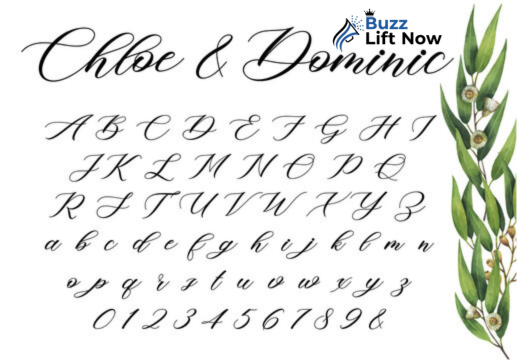

Easy fancy cursive letters have a timeless charm that continues to attract students, artists, calligraphers, and everyday writers alike. In a world dominated by keyboards and touchscreens, the ability to create elegant handwritten letters feels almost magical. Whether you want to improve your handwriting, design invitations, create logos, or simply enjoy a creative hobby, learning easy fancy cursive letters can transform the way you write and express yourself.
This in-depth guide explores what makes easy fancy cursive letters special, how beginners can master them, which styles are most popular, and how to practice effectively at home. Along the way, you will find practical tips, trusted resources, and expert advice to help you develop confident, graceful cursive writing.
Understanding the Beauty of Easy Fancy Cursive Letters
Easy fancy cursive letters combine simplicity with decorative flow. Unlike complex calligraphy styles that require special tools and years of training, easy fancy cursive letters are designed to be approachable for beginners while still looking stylish and artistic.
At their core, these letters are based on traditional cursive handwriting. The difference lies in subtle flourishes, smooth curves, and balanced spacing that make each word look refined without becoming hard to read. This balance between beauty and legibility is what makes easy fancy cursive letters so popular for both personal and professional use.
Many people use easy fancy cursive letters for journaling, school projects, wedding stationery, branding designs, and social media graphics. The versatility of this style allows it to fit both formal and casual settings.
According to educational research shared by the National Center for Education Statistics, handwriting practice supports fine motor skills and cognitive development. Learning easy fancy cursive letters is not only an artistic pursuit but also a valuable skill that strengthens focus and coordination.
Why Easy Fancy Cursive Letters Are Perfect for Beginners
One of the biggest advantages of easy fancy cursive letters is accessibility. You do not need expensive pens, rare ink, or advanced training to begin. A simple pen and notebook are enough to start practicing.
Easy fancy cursive letters use gentle loops, consistent slants, and predictable stroke patterns. This makes them less intimidating for beginners who may feel overwhelmed by traditional calligraphy scripts.
Another reason this style works so well for learners is muscle memory. Repeating simple cursive forms trains your hand to move smoothly across the page. Over time, the movements become natural, and your writing gains speed and confidence.
Teachers often recommend cursive writing because it improves letter recognition and spelling. Easy fancy cursive letters offer the added benefit of motivating learners through visible beauty and progress.
The History Behind Fancy Cursive Writing
To truly appreciate easy fancy cursive letters, it helps to understand where cursive writing comes from. Cursive scripts evolved in Europe during the Middle Ages as a faster way for scribes to write long documents. Flowing letters reduced the need to lift the pen, saving time and effort.
Over centuries, cursive styles became more decorative. In the eighteenth and nineteenth centuries, formal penmanship was a mark of education and social status. Scripts such as Spencerian and Copperplate influenced many modern cursive alphabets.
Easy fancy cursive letters are a modern adaptation of these classical forms. They borrow elegance from historical scripts while simplifying shapes for everyday use.
If you are interested in the evolution of handwriting, the British Library offers excellent articles on the history of scripts and calligraphy that provide valuable background knowledge.
Core Features of Easy Fancy Cursive Letters
Easy fancy cursive letters share several defining characteristics that make them both attractive and practical.
They use consistent slanting, usually slightly to the right, which creates visual harmony across a word or sentence. The curves are smooth and rounded, avoiding sharp angles that can disrupt the flow.
Spacing plays a major role. Letters are evenly spaced, and connections between letters are clean and natural. This prevents the writing from looking crowded or messy.
Decorative elements are used sparingly. Small loops, gentle tails, and subtle extensions add personality without sacrificing readability.
These features allow easy fancy cursive letters to remain legible even when written quickly, making them suitable for notes, cards, and everyday writing.
Learning the Basic Strokes First
Before writing full words, it is important to master the basic strokes that form easy fancy cursive letters. Most cursive letters are built from a few simple movements.
These include upward entry strokes, downward main strokes, exit strokes, and rounded loops. Practicing these shapes individually trains your hand to control pressure and direction.
Start slowly. Focus on keeping your strokes light and consistent. Over time, you can increase speed without losing accuracy.
Many handwriting experts recommend practicing basic strokes for at least ten minutes a day. This short daily habit builds strong foundations for all cursive styles.
The University of Michigan’s handwriting development resources explain how stroke practice improves motor learning and writing efficiency.
Writing Lowercase Easy Fancy Cursive Letters
Lowercase letters form the backbone of most writing, so they deserve special attention. In easy fancy cursive letters, lowercase forms are designed to connect smoothly and maintain consistent height.
Letters such as a, c, e, i, and o rely heavily on rounded shapes. Practicing these letters together helps you maintain uniform curves.
Tall letters like l, h, and k should rise gracefully above the midline without leaning too far. Short letters like m, n, and r should remain compact and balanced.
As you practice, pay attention to rhythm. Each letter should flow naturally into the next without hesitation.
Writing simple words repeatedly allows you to develop a steady writing tempo, which is essential for clean cursive handwriting.
Writing Uppercase Easy Fancy Cursive Letters
Uppercase letters often intimidate beginners because they involve larger movements and more decoration. Easy fancy cursive letters simplify uppercase forms to keep them practical.
Uppercase cursive letters usually begin with an entry stroke, followed by a main loop or curve, and finish with an exit stroke that leads into the next letter.
The key is proportion. Uppercase letters should be taller than lowercase ones but not so large that they dominate the word.
Consistency matters more than complexity. A simple, well-proportioned uppercase letter looks more elegant than an overly ornate one.
Practicing names, titles, and headings is a great way to gain confidence with uppercase cursive writing.
Tools and Materials for Practicing Easy Fancy Cursive Letters
You do not need expensive tools to learn easy fancy cursive letters, but the right materials can make practice more enjoyable.
Smooth paper reduces friction and helps your pen glide easily. Lined paper with midlines and baselines is ideal for maintaining consistent letter height.
A gel pen or fine-tip ballpoint pen works well for beginners. These pens provide smooth ink flow without requiring heavy pressure.
As you advance, you may explore fountain pens or brush pens, but they are not necessary for mastering the basics.
Maintaining a dedicated practice notebook helps track progress and keeps your exercises organized.
Daily Practice Strategies That Work
Consistency is more important than long practice sessions. Ten to twenty minutes a day is enough to see steady improvement.
Begin each session with warm-up strokes. Then practice individual letters, followed by short words and sentences.
Copying model alphabets is helpful, but free writing is equally important. Writing journal entries or quotes in easy fancy cursive letters builds real-world skill.
Set small goals, such as improving one letter per day. Celebrate small improvements to stay motivated.
Research published in the Journal of Learning Disabilities shows that regular handwriting practice improves writing fluency and confidence, especially in young learners.
Using Easy Fancy Cursive Letters for Creative Projects
Once you gain confidence, easy fancy cursive letters open the door to many creative uses.
You can design greeting cards, wedding invitations, certificates, and wall art. Many small businesses use cursive lettering in logos and branding to convey elegance and warmth.
Digital artists often scan handwritten cursive and convert it into fonts or graphics. This blends traditional writing with modern design.
Teachers use easy fancy cursive letters to create visually appealing worksheets and classroom displays.
The possibilities grow as your skill improves, making cursive writing both a hobby and a practical asset.
Common Mistakes and How to Fix Them
Every learner makes mistakes, and recognizing them early speeds up progress.
One common issue is inconsistent slant. If your letters lean in different directions, practice writing guide lines at a fixed angle.
Another problem is uneven spacing. Crowded letters reduce readability. Slow down and focus on leaving equal space between letters.
Heavy pressure can cause shaky lines and hand fatigue. Practice writing lightly and let the pen glide.
If your connections look awkward, isolate the transition between two letters and practice it repeatedly.
Patience is essential. Improvement comes gradually, not overnight.
Digital Resources for Learning Easy Fancy Cursive Letters
Many high-quality resources are available online to support your learning.
Websites like Handwriting Without Tears offer structured handwriting programs for beginners.
The International Association of Master Penmen, Engrossers and Teachers provides educational articles on cursive and calligraphy.
Video platforms such as YouTube host free tutorials that demonstrate letter formation step by step.
Using trusted educational resources ensures you learn correct techniques from the start.
How Easy Fancy Cursive Letters Support Learning and Memory
Beyond beauty, easy fancy cursive letters offer cognitive benefits. Writing by hand activates multiple areas of the brain involved in memory, language, and motor control.
Studies from Princeton University show that handwriting helps students retain information better than typing.
For children, cursive writing improves letter recognition and reading fluency. For adults, it supports focus and mindfulness.
Learning easy fancy cursive letters is not just about appearance. It strengthens mental and physical coordination.
The Future of Cursive Writing in a Digital World
Some people worry that cursive writing is disappearing. However, interest in hand lettering and calligraphy is growing online.
Social media platforms showcase thousands of cursive artists and hobbyists sharing their work daily.
Schools are reintroducing cursive instruction in many regions because of its educational value.
Easy fancy cursive letters bridge tradition and modern creativity, ensuring that this art form remains alive and relevant.
Conclusion: Why Easy Fancy Cursive Letters Are Worth Learning
Easy fancy cursive letters combine elegance, accessibility, and practical value. They allow beginners to create beautiful handwriting without complex tools or advanced training.
With consistent practice, patience, and the right guidance, anyone can master this graceful style.
Whether you want to improve your handwriting, explore a creative hobby, or add a personal touch to your projects, easy fancy cursive letters offer a rewarding journey.
Start today, write slowly, and enjoy the art of beautiful writing.
Frequently Asked Questions About Easy Fancy Cursive Letters
What are easy fancy cursive letters best used for
Easy fancy cursive letters are ideal for journaling, greeting cards, invitations, school projects, and decorative writing where beauty and readability are both important.
How long does it take to learn easy fancy cursive letters
With daily practice of fifteen minutes, most beginners notice improvement within two to three weeks and develop confident writing within a few months.
Do I need special pens to write easy fancy cursive letters
No special pens are required. A smooth ballpoint or gel pen works well for beginners and is enough to learn this style.
Are easy fancy cursive letters suitable for children
Yes, this style is excellent for children because it improves motor skills, letter recognition, and writing confidence.
Can easy fancy cursive letters be used in digital design
Yes, handwritten cursive can be scanned and converted into digital fonts or graphics for use in logos, posters, and social media designs.